
Copperfield Chimney Sweep in Lakewood: A Homeowner’s Guide
If you searched for a “Copperfield chimney sweep” in Lakewood, you’re not alone, and you’re not wrong to ask. Copperfield is a supply brand, not a service company, in the same way a homeowner might search for a “Moen plumber” when the real answer is a plumber who installs Moen parts. Once that gets cleared up, something genuinely useful comes into view: the brand of hardware inside your chimney tells you a lot about how carefully the last repair was specified, and the supply lines your sweep works with tell you a lot about the one you’re about to hire. If you’d rather skip the research and just get a straight answer about your own flue, call (888) 320-6023.
Key Takeaways:
- Copperfield is a professional-grade chimney supply brand, not a sweep-and-repair company.
- Many Lakewood homes already contain Copperfield components, especially caps and dampers.
- What a sweep sources and stocks predicts repair quality more than any marketing claim.
- One question during an estimate (“what brand of liner or damper would you use, and why?”) separates specialists from generalists.
What Is Copperfield Chimney Supply, Exactly?
Copperfield is a manufacturer and distributor of professional-grade chimney components and accessories, sold through trade channels rather than the aisle endcap at a big-box store. That distinction matters. The products a supply house like Copperfield makes are specified by technicians who’ve been trained to fit them to a particular flue, not picked off a shelf by a homeowner guessing at dimensions. In practical terms, when a Lakewood chimney sweep tells you they’re installing a Copperfield cap or damper, they’re signaling that the part is a cataloged, spec-driven product and that they know how to size it.
Copperfield’s line covers the parts of a chimney system homeowners interact with most: chimney caps, top-mount dampers, throat dampers, and various liner and accessory components. The company is a name you’ll see on hardware, not a name on the side of a service van. If you call a Copperfield number expecting a technician, you’ll be politely redirected. That’s the confusion this guide exists to clear up, and it’s a useful one, because once you understand what Copperfield actually makes, you can look at your own chimney and start asking better questions.
For our part, we source from a curated roster of industry brands, and Copperfield is on it, alongside DuraFlex, HeatShield, Gelco, Olympia Chimney, and Famco. We don’t stock everything those lines make, and we don’t want to. What matters is knowing which product family belongs in which situation and being honest when a repair doesn’t call for one at all.
Do You Already Have Copperfield Parts in Your Chimney?
Quite possibly. Copperfield components are common in Lakewood homes because they’re the kind of parts professional sweeps install for routine upgrades: a new cap after a hail-dented old one, a top-mount damper retrofit where the throat damper has rusted shut, a replacement damper that actually seals against a cold draft. If a previous owner had the chimney serviced by a competent trade shop, there’s a decent chance a Copperfield part went in.
You can often identify components from the ground or with a strong flashlight at the firebox. Look for:
- Chimney cap: a metal or stainless cap over the flue tile, sometimes with a stamped or embossed manufacturer mark on the top or the skirt. Multi-flue caps and single-flue caps are both common.
- Top-mount damper: a cable-operated assembly at the very top of the flue. If you have one, you’ll see a stainless plate up top and a pull-chain or handle at the firebox wall.
- Throat damper: a metal plate at the smoke chamber, operated with a lever or handle inside the firebox. Older ones are cast iron; newer replacements are steel.
- Liner: a flexible or rigid stainless liner visible up the flue. Brand stamps aren’t always readable from below, but a liner that looks uniform, seamless, and corrugated has likely been professionally installed.
Don’t rely on your own read of a cap or damper, though. Wear, hail damage, and simple age make identification harder than it looks from the hearth. A proper inspection gets you a real answer, and it also flags whether that cap is still doing its job against Colorado weather.
Why the Supply Chain a Sweep Uses Predicts Quality
Here’s the part most homeowners never think to ask about, and it’s the heart of this guide: the brand of hardware a technician reaches for tells you how they think about a repair. A sweep who sources from a professional supply line is working from a catalog with spec sheets, sizing charts, and manufacturer support. A sweep who sources from whatever the nearest hardware store has on the shelf is improvising, and while improvisation occasionally works, it shows up later as a cap that doesn’t seal, a damper that doesn’t close flush, or a liner with a fit issue nobody caught at install.
We’ve seen the difference in our own work. Lakewood homes present a few specific challenges that make parts sourcing matter more than it does in a milder climate:
- Hail and wind: a cap that isn’t properly sized and anchored tends to become a projectile or a sieve. Copperfield’s cap line exists precisely because caps are structural, not decorative.
- Freeze-thaw cycles: drafts down an unsealed flue waste heat all winter. A top-mount damper upgrade is a small energy-efficiency project, not a luxury.
- Older housing stock: many Lakewood neighborhoods date to the mid-to-late 20th century, which means original dampers, aging flue liners, and mixed masonry conditions. Fitting modern parts to older systems requires the kind of sizing flexibility that professional lines provide. We use DuraFlex liner systems for exactly this reason: the flexibility solves fit problems that rigid liners can’t.
None of this is a knock on generic parts that work fine in the right application. It’s a point about accountability. When a technician specifies a known brand, they can be held to a spec. When they specify “whatever was in the truck,” nobody can.
How to Ask a Sweep About Their Material Sourcing
You don’t need to become a chimney supply expert to hire well. You need one question, asked plainly during the estimate: “If this repair called for a new damper or cap, what brand would you use, and why that one?” The answer tells you a lot. A specialist names a product line and connects it to your flue’s specific condition. A generalist says “we use good quality materials” and moves on. The second answer isn’t a lie, it just isn’t information.
A few more questions that separate the two:
- Will you show me photos from inside the flue before recommending anything? A camera inspection with a photo report is how you verify the recommendation isn’t an upsell.
- For liner work, how would you handle an irregular or older flue shape? A flexible solution like DuraFlex points to fit-to-situation thinking. On masonry liners that are cracked but still sound, a ceramic resurfacing system like HeatShield is the repair-first alternative to full relining.
- Who does the repair if it needs more than a cleaning? A single-contractor model means the person who inspected is accountable for the fix. Handoffs to a subcontractor are where problems go to be forgotten.
- What happens if nothing needs to be done? A good answer sounds like “then we tell you that and you don’t spend money.” If a sweep can’t say that, ask why.
These questions also help you check a sweep’s credibility in a city like Lakewood, where older homes and mixed housing conditions mean “standard” work rarely is. Our technicians have up to 14 years of experience, and the first thing most of them will tell you is that a lot of chimneys don’t need the big repair the last company suggested.
Copperfield Product Categories That Matter in Lakewood
Two product categories do most of the heavy lifting for Lakewood homeowners concerned about weather and efficiency: chimney caps and dampers. Both are small-ticket items compared to relining, and both have an outsized effect on how the chimney performs through Colorado’s wind, hail, and cold snaps. Getting either of them sized wrong is a case study in why sourcing matters.
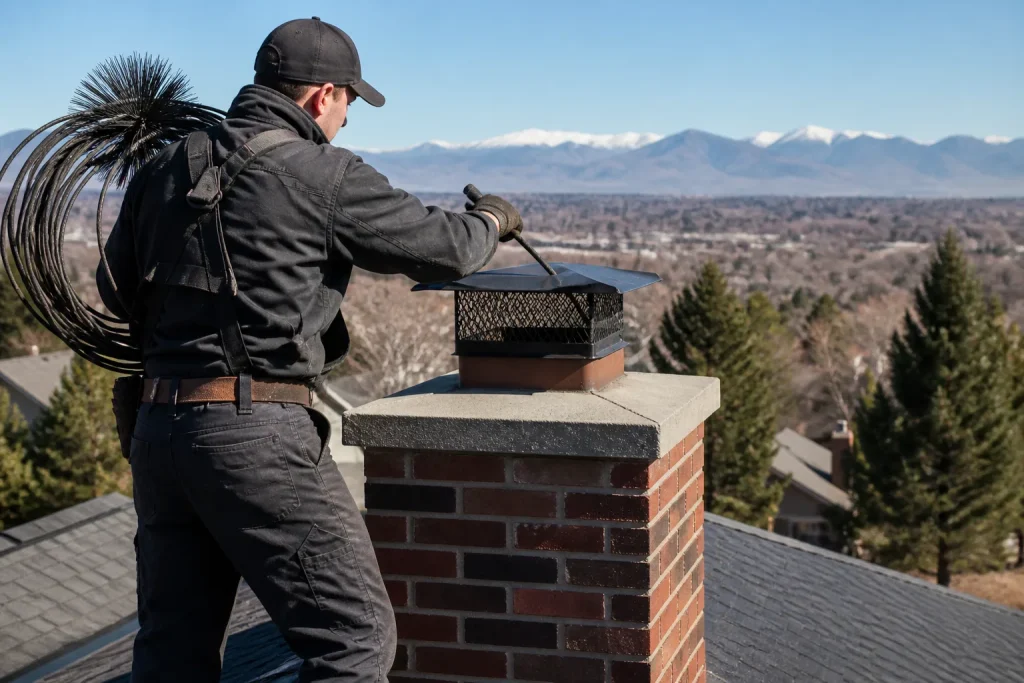
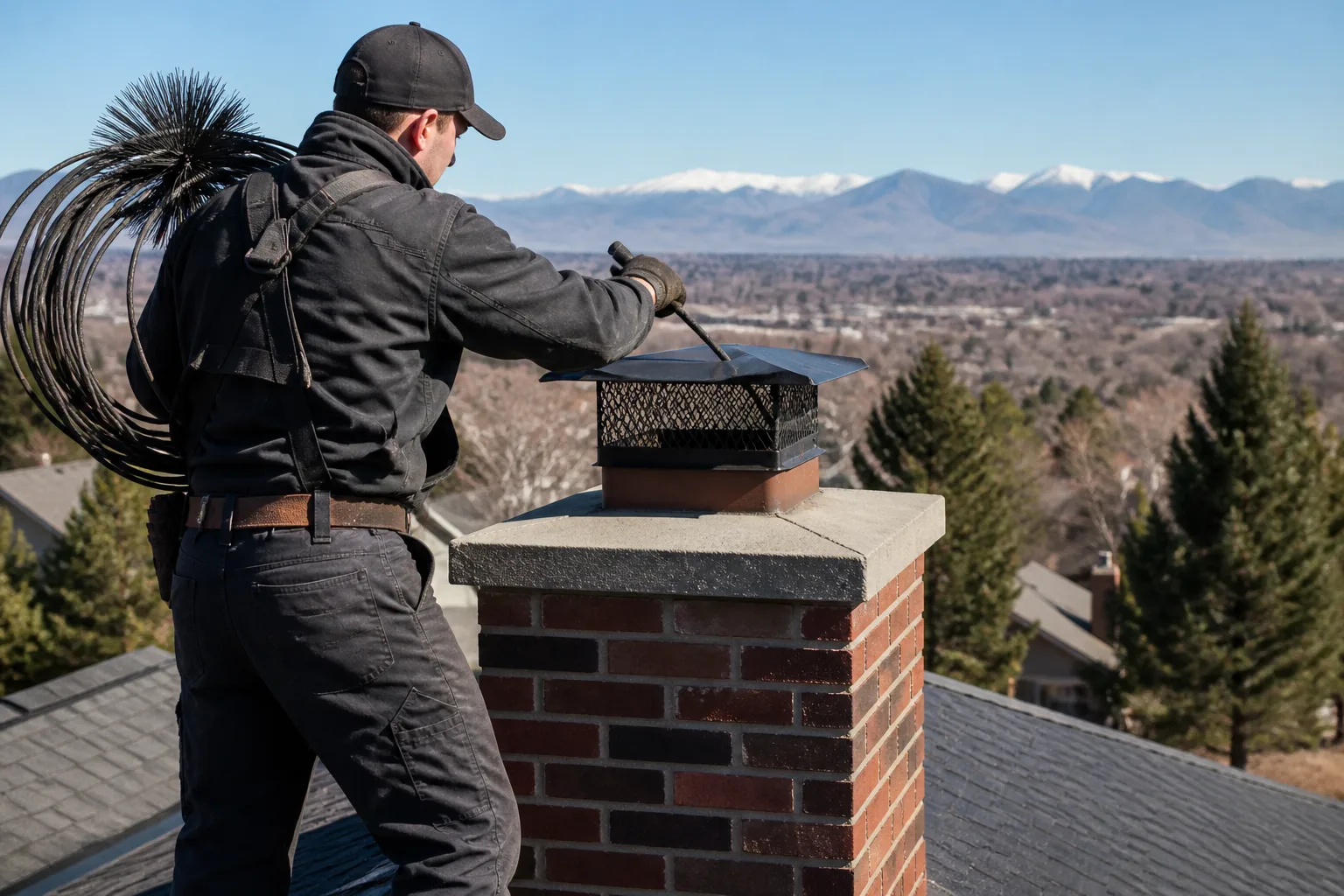
Chimney caps. A cap’s job is to keep rain, snow, birds, and debris out of the flue while letting exhaust escape freely. It’s also structural: a cap needs to be anchored to the flue tile or the crown, sized within tolerance of the flue’s interior dimensions, and built to survive hail. A Copperfield cap, properly selected and installed, is the kind of part that quietly does its job for years. A too-small or loosely fitted cap lets water in and, over a season or two, the consequences show up inside the firebox and on the smoke chamber’s masonry.
Dampers. An original throat damper that’s rusted open, warped, or simply missing is a heat leak. A top-mount damper at the flue’s peak seals better and keeps heated air from escaping up the chimney whenever the fireplace is idle. This is where the cold-climate efficiency case gets concrete: at Lakewood’s elevation, winter drafts are real, and a properly fitted top-mount damper is a modest upgrade with a measurable effect on comfort. Copperfield makes components in both categories, and specifying the right one is exactly the kind of decision a materials-knowledgeable sweep is supposed to be able to make on your behalf.
When to Call a Pro
Cleanings and cap or damper replacements are routine, but a few situations call for a trained professional without delay. Any of these is a phone call, not a weekend project:
- A strong, persistent draft of smoke backing into the room when you light a fire.
- Creosote buildup that’s glossy, tar-like, and visible above the damper. That’s a chimney fire risk, and it needs professional removal, not a brush.
- A damper that won’t open or close, or a cap that’s loose or missing after a storm.
- Any cracked or spalling masonry in the firebox or smoke chamber.
- Liner damage or an unlined flue in an older home. This is where professional-grade materials, and a technician who knows how to apply them, actually matter.
For anything in this territory, get an inspection before you buy parts. A camera inspection and a clear photo report cost far less than guessing wrong.
The Bottom Line
Copperfield is a professional supply brand, not a chimney sweep. Once you know that, the search becomes a smarter one: you’re not looking for a company named Copperfield, you’re looking for a sweep who works with professional-grade components like Copperfield, DuraFlex, and HeatShield, and who can explain why those parts fit your flue. If you’re in Lakewood and need help, Oasis Chimney Sweep offers free estimates, call (888) 320-6023.
Related services in Lakewood: chimney repair and routine sweeping through our main Oasis Chimney Sweep page.
Frequently Asked Questions
Is Copperfield a chimney sweep company? No. Copperfield is a manufacturer and distributor of professional-grade chimney components, not a service provider. If you’re looking for sweeping, inspection, or repair, you’ll want a full-service contractor that works with professional supply lines. Call (888) 320-6023 for a free estimate.
How do I know a sweep uses professional-grade parts? Ask directly what brand they’d use for the specific repair and why. A specialist names a product line and ties it to your flue’s condition. You can also ask to see photos from the inspection before any parts are recommended. We use Copperfield, DuraFlex, and HeatShield where each is the right fit, and we’re happy to explain the choice. Call (888) 320-6023 to book an inspection.
Should I upgrade my damper for energy efficiency? If your throat damper is warped, rusted open, or missing, a top-mount damper upgrade is a sensible, cost-effective fix in Colorado’s climate. It seals the flue at the top and keeps winter heat from escaping up the chimney. Call (888) 320-6023 to find out whether your current damper is doing its job.
What’s the single best question to ask during an estimate? “What would you install, and why that product?” The answer separates specialists from generalists faster than any review. If you want to see how a materials-knowledgeable shop answers, call (888) 320-6023. We answer 24/7, and a free estimate sets the final price.
If you’d like to know what’s actually inside your flue, call Oasis Chimney Sweep at (888) 320-6023 for a free estimate. We answer 24/7. Fast dispatch from 7am to 7pm, Sunday through Friday.
Written by the team at Oasis Chimney Sweep.
Need Chimney Cleaning Help?
Call Oasis Chimney Sweep - licensed & insured, with free written estimates in Lakewood.
(888) 320-6023